How to Choose a Dumpster Rental in Kalamazoo, MI
Choosing a dumpster rental is not only about finding a container and setting a delivery date. The right option depends on the size of the cleanup, the type of debris, the available space, and how quickly the project needs to move. A small garage cleanout may need a very different container than a roofing project, basement cleanup, rental property turnover, or full home cleanout.
For residents, landlords, contractors, and property managers in Kalamazoo, MI, planning ahead can help prevent common issues such as choosing the wrong dumpster size, overloading the container, blocking access, or placing restricted materials in the load. This guide explains the main factors to consider when comparing dumpster rental options for residential and light construction projects.
Start by Defining the Cleanup Project
The first step is understanding what kind of cleanup is being handled. Dumpster needs can change based on whether the project involves household junk, construction debris, yard waste, roofing materials, or a mixture of several debris types. A clear project description makes it easier to choose a container size and avoid disposal problems later.
A home cleanout often includes furniture, boxes, clothing, toys, kitchen items, old decorations, shelving, and general clutter. These materials may be lighter than construction waste, but they can take up a lot of space. Couches, mattresses, dressers, and tables do not stack neatly, so they may fill a dumpster faster than expected.
A remodeling project is different. Removing cabinets, drywall, flooring, tile, trim, doors, and fixtures can create a mix of bulky and heavy debris. A bathroom renovation may not produce a large pile by volume, but tile, plaster, and old flooring can become heavy. A kitchen remodel may include cabinets, countertops, wood, packaging, and old appliances, each with different handling needs.
Rental property cleanouts can be unpredictable. A landlord may find mattresses, broken furniture, bagged trash, damaged carpet, old blinds, yard debris, and abandoned personal items. If repairs are scheduled after the cleanout, the dumpster may also need room for construction debris. In that case, it may be useful to separate household junk from renovation materials before loading begins.
Estimate the Right Dumpster Size
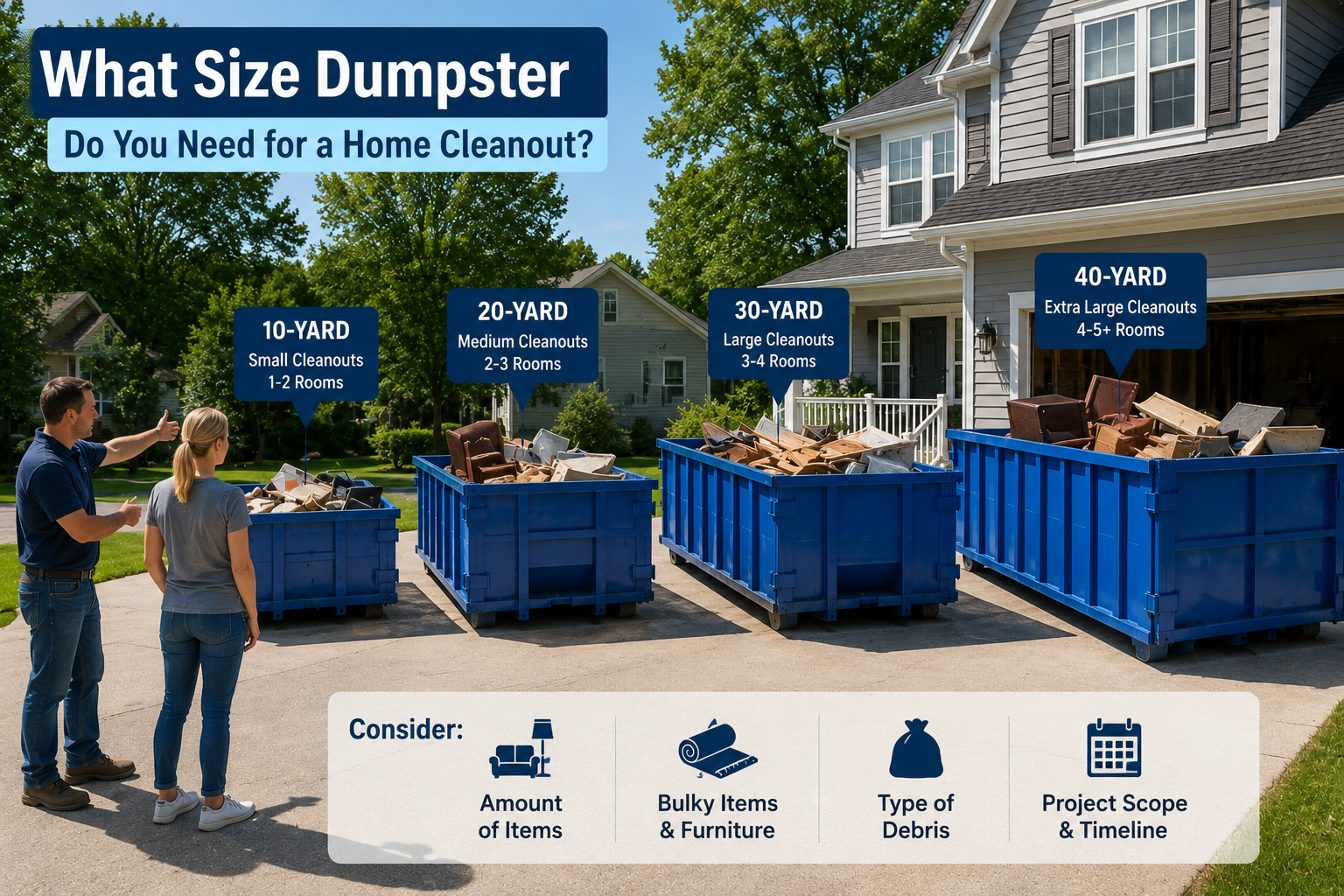
Dumpster sizes are usually measured in cubic yards. One cubic yard is roughly the volume of a standard household washing machine. A 10-yard dumpster holds about 10 cubic yards of debris, while a 20-yard dumpster holds about twice that amount. The best size depends on both the amount of material and how the debris will fit inside the container.
A small dumpster may work for a single-room cleanout, attic cleanup, compact garage project, or minor flooring removal. A mid-size dumpster may be better for a basement, larger garage, rental turnover, moving cleanout, or moderate remodeling work. Larger containers are often used for estate cleanouts, full-house cleanouts, major renovations, or projects with bulky furniture and large amounts of debris.
One common mistake is choosing a dumpster based only on the visible pile. Debris often expands once items are removed from closets, cabinets, shelves, storage bins, and back rooms. A garage that looks moderately cluttered may produce more waste once old boxes, broken tools, shelving, lawn equipment, and furniture are pulled out.
Bulky items should be counted separately. A cleanup involving a sofa, two mattresses, a dining table, several dressers, and boxes from a basement may require more space than a project with only bagged trash. Anyone unsure about container capacity may benefit from reviewing a dumpster size guide before choosing a roll-off dumpster.
Consider Weight Limits and Debris Type
Dumpster size is only part of the decision. Weight limits also matter. A container may still have open space but be too heavy for safe transport. This is most common with dense materials such as concrete, brick, dirt, tile, plaster, shingles, wet carpet, and heavy demolition debris.
For general household junk, volume is usually the main concern. For construction debris, weight can become the bigger issue. A small bathroom tear-out with tile and plaster may weigh more than a larger pile of cardboard, furniture, or light household clutter. Roofing projects can also become heavy because shingles add weight quickly, especially when multiple layers are removed.
Know What Should Not Go in a Dumpster
Before a dumpster is delivered, the cleanup area should be checked for materials that may need special handling. Not every item from a garage, basement, shed, or worksite belongs in a standard roll-off container. Restricted materials can create safety, environmental, or disposal issues.
Common items that may require separate handling include oil-based paint, solvents, pesticides, motor oil, batteries, propane tanks, fluorescent bulbs, certain electronics, and some appliances. These items are often found during older home cleanouts, especially in garages, utility rooms, workshops, and sheds.
Local waste information can help residents separate materials before loading begins. The City of Kalamazoo provides public guidance on recycling, waste programs, yard waste, bulk trash, and household hazardous waste resources through its Recycling & Waste page. Checking this type of local resource before a large cleanup can reduce confusion about what should be handled separately.
Appliances may also need attention. Refrigerators, freezers, air conditioners, and dehumidifiers can contain refrigerants or components that require proper handling. Tires, electronics, mattresses, and large auto parts may also have different rules depending on the disposal facility or rental provider. Setting questionable items aside early is easier than trying to remove them after the dumpster is full.
Review Placement, Access, and Loading Space
A dumpster must be placed where it can be delivered, loaded, and picked up safely. Driveways are often the most practical option for residential projects because they keep the container close to the work area and usually avoid blocking public streets. However, the placement area should be checked before delivery.
The surface should be firm and reasonably level. The area should be clear of parked vehicles, trailers, low branches, overhead wires, basketball hoops, fences, and other obstacles. Delivery trucks need room to approach the placement area and roll the container off safely. Later, the truck must be able to return and retrieve the loaded dumpster without being blocked.
The loading path matters as well. A dumpster placed too far from the cleanup can slow the project, especially when heavy furniture, boxes, or construction debris must be carried by hand. A dumpster placed too close to a garage door, entryway, or work area may block access. The best location is usually close enough to be convenient without interfering with normal movement around the property.
Street placement may require additional planning. In some parts of Kalamazoo, MI, properties may have short driveways, narrow lots, or limited off-street space. If a dumpster needs to be placed on a street, alley, or public right-of-way, local permission may be required. Checking this before delivery helps avoid last-minute placement issues.
Compare Rental Details Before Scheduling
Once the project type, debris, size, and placement area are understood, the final step is comparing rental details. Pricing is important, but it should not be the only factor. A useful rental arrangement should be clear about container size, rental period, weight allowance, accepted materials, pickup process, and possible extra fees.
For example, a homeowner cleaning out a basement may need to know whether old carpet, broken furniture, shelving, and general junk can be placed in the same container. A contractor may need to confirm whether drywall, flooring, cabinets, or shingles are acceptable. A landlord handling a rental cleanout may need to know whether same-day or next-day delivery is available and how long the container can stay onsite.
People researching a local dumpster rental service may see local brands such as Kalamazoo Dumpster Colex connected with roll-off dumpster information for the area. The most useful comparison points are practical: available sizes, debris rules, delivery access, rental length, and the type of cleanup being handled.
Before scheduling, it helps to confirm a few basic details:
- The main type of debris being removed
- The approximate amount of material or number of rooms involved
- Large or bulky items such as mattresses, sofas, cabinets, or appliances
- Whether heavy debris such as tile, dirt, shingles, or concrete is included
- The preferred placement location and any access limits
- The expected loading timeline and pickup needs
These details can prevent many common problems. They also help match the container to the real project instead of relying on a rough guess.
Conclusion
Choosing the right dumpster rental comes down to understanding the project before the container arrives. Cleanup type, debris volume, material weight, placement space, and rental timing all affect the decision. A small attic cleanout, full basement cleanup, rental property turnover, roofing job, and remodeling project each require a different approach.
For residents and property managers in Kalamazoo, MI, careful planning can make the cleanup safer and more predictable. When the dumpster size fits the debris, restricted materials are separated, and the placement area is ready, the rental process is more likely to support the project from start to finish.